The Jewish Road Podcast
Many Christians struggle to make sense of the Old Testament, or quietly wonder if it still matters. Many Jewish people have never seriously considered Jesus. But what if the two parts of the story were never meant to be separated? Hosted by Jewish followers of Jesus, Matt and Ron Davis, this podcast connects the Hebrew Scriptures with the hope of Messiah found in the New Testament. We tell the story of Israel and help Israel tell her story. God made a promise. God keeps His promises. He’s not done with Israel. And neither are we.
Listen on:











Episodes
Friday Oct 11, 2024
Friday Oct 11, 2024
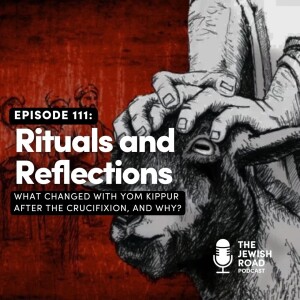
Episode Summary:
What if you waited your entire life, followed rituals painstakingly, prayed for atonement, but never really knew if you had been forgiven by God?
This is the reality for many in the Jewish community during Yom Kippur.
In this episode of The Jewish Road Podcast, we explore the Day of Atonement, looking into its significance for both Jews and Christians. We unpack the biblical roots of Yom Kippur, discuss its modern observance, and ask the critical question: if Jesus is the ultimate High Priest and the final atonement, what does that mean for us today?
5 Key Takeaways:
Yom Kippur in Jewish Tradition: Yom Kippur, or the Day of Atonement, is the holiest day in Judaism, where Jewish people seek to make things right with God, often unsure of whether their efforts are enough.
Jesus as the Fulfillment of Atonement: The temple sacrifices and the role of the High Priest in Jewish history were shadows of what Jesus would ultimately fulfill as the final atonement for sin.
The Significance of the Scarlet Thread: For 40 years before the destruction of the Second Temple, the scarlet thread on the Yom Kippur scapegoat stopped turning white, symbolizing that the sacrifices were no longer accepted - coinciding with the death and resurrection of Jesus.
Jewish Rituals and the Messiah: Jewish traditions and practices, like the two goats on Yom Kippur, symbolically point to Jesus, who became both the sacrifice and the scapegoat for humanity's sins.
The Growing Openness in Israel: Amid military tension, young Israeli soldiers are increasingly looking toward God, with many becoming open to the idea of Jesus as the Messiah.
Chapter Markers:
00:10 – Introduction: Yom Kippur, the High Holy Days, and Israel's current state
03:00 – The Meaning of Yom Kippur and Jewish Rituals: A Time to Make Things Right
05:00 – Leviticus 16: The Scriptural Basis for the Day of Atonement
09:00 – Tale of Two Goats: The Sacrificial and Scapegoat Symbols
12:30 – The Scarlet Thread and Its Prophetic Significance
17:00 – The Shift in the Covenant: Jesus as the Final High Priest
21:30 – The Talmud and the Mysterious Change 40 Years Before the Temple’s Fall
26:00 – Hebrews: Jesus’ Role as the Ultimate High Priest and Fulfillment of the Atonement
29:00 – Israel Today: Spiritual Awakening and Openness to Jesus
31:26 – Closing Remarks: Praying for the Peace of Jerusalem

Friday Aug 30, 2024
Friday Aug 30, 2024
Summary
How do you reconcile being both Arab and Israeli in a land of deep divisions?
For Robert "Ruby" Bishai, this tension is not only part of his personal journey but also the heartbeat of his ministry. Ruby, an Arab Israeli believer in Yeshua, has found a profound calling to serve both the Jewish and Arab people of Israel. Growing up in a Jewish town as an Arab Christian gave him a unique perspective on the challenges and beauty of these two cultures colliding.
Today, Ruby is a bridge between these worlds, striving to foster unity and bring the hope of Messiah to those who seem divided by history.
Through Fields of Wheat, the ministry Ruby serves with, he mentors young believers and supports soldiers during times of war - often being a living testimony of love across cultural boundaries. His passion stems from a deep sense of destiny, recognizing that God has called him to stand in the gap between Arabs and Jews, seeing the promise of Isaiah 19:24,25 come to life.
Ruby’s story is one of identity, reconciliation, and the unshakable hope that peace and salvation will come to both Arab and Jewish people.
Takeaways
Living as an Arab Israeli in Israel comes with its challenges, but Ruby Beshai embraces his unique identity and serves both the Arab and Jewish communities.
Fields of Wheat is a ministry in Israel that focuses on developing the youth and young adult believers and fostering unity between Jewish and Arab believers.
Ruby Beshai has had the opportunity to supply soldiers with equipment during times of war and has also shared the gospel with them, seeing an openness among the Jewish people.
Despite the conflicts and tensions in the Middle East, there is hope for peace and the salvation of both the Jewish and Arab people.
Chapters
00:00 - Introduction and Setting
01:24 - Ruby's Background and Identity
03:20 - Growing Up in a Jewish Community
04:17 - Embracing a Unique Identity
06:16 - Fields of Wheat Ministry
07:13 - Ministry During Times of War
09:10 - The Impact of the War on the Next Generation
10:39 - Identity and Perception
13:07 - Perception by Jewish People and Arab Brothers and Sisters
14:03 - Arab Israelis and Palestinians
16:00 - Struggles with Identity and Faith
19:21 - Hope in Fulfilling the Potential of the Jewish People
21:16 - Hope for Peace in the Middle East
22:12 - Perceptions of Israel and the Conflict
25:06 - Unity Among Arab Israelis
29:50 - Freedom and Hope in Israel
31:43 - Hope for Peace and Salvation
35:41 - Bringing Good News to the Jewish People
36:08 - Sharing Perspectives and Bringing Understanding
Thursday Aug 22, 2024
Thursday Aug 22, 2024
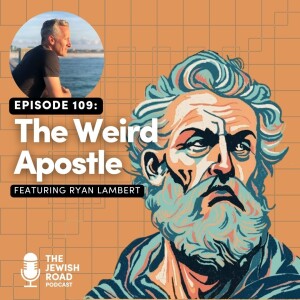
Summary
Imagine discovering that one of the most influential figures in Biblical history may have been misunderstood for centuries. That’s the compelling problem Ryan Lambert tackles in his book, The Weird Apostle. As a Messianic Jew, Lambert challenges the traditional portrayal of the Apostle Paul, urging us to see Paul not as a renegade who sought to break away from Judaism, but as a devoted Jew who remained faithful to the Torah.
In our latest episode of The Jewish Road Podcast, Lambert shares his deep passion for building bridges between Christians and Jews, shining a new light on Paul's mission and his message.
Lambert argues that by understanding Paul within his Jewish context, we can undo centuries of replacement theology that has strained Christian-Jewish relations. He points out that Paul never intended to create a new religion but sought instead to unite Jews and Gentiles under the worship of the one true God. And far from being a distant theologian, Paul was a real man writing letters to real communities, with a sense of urgency about the return of the Messiah.
Lambert’s insights invite us to reconsider Paul’s legacy and the rich, shared history between Jews and Christians, opening the door to greater unity and understanding in our faith journeys.
Takeaways
Understanding Paul in his Jewish context can challenge the traditional narrative and improve relationships between Jews and Christians.
Paul was a faithful Jew who upheld the Torah and did not seek to replace Judaism with Christianity.
The Jewishness of Jesus is widely recognized, but the Jewishness of Paul is often overlooked.
Reframing Paul's role as a bridge between Judaism and Christianity can help foster dialogue and understanding. Paul believed that the end was near and expected the Messiah's return in his lifetime.
Paul's letters were intended for real communities and not as theological texts for future generations.
Replacement theology has created division between Christians and Jews and goes against Paul's message.
Paul's message was intended to join Jews and non-Jews together under the worship of the one true God.
Chapters
00:00 - Introduction and Prayer
01:16 - Meeting Ryan Lambert at the Israel Summit
06:54 - Discovering Messianic Judaism
10:48 - Passion for Building Bridges Between Christians and Jews
15:37 - Fascination with the Apostle Paul
23:36 - Paul as the Fulcrum of Jewish and Christian History
25:23 - Paul's Urgency and Expectation
27:14 - Paul as a Letter Writer
30:22 - The Impact of Replacement Theology
39:23 - Joining Jews and Non-Jews in Worship

Saturday Aug 17, 2024
Saturday Aug 17, 2024
Summary
Why do so many Christians misunderstand the conflict in Israel, and what should we do about it? In our latest episode, we dive into this pressing issue with Dr. Jeff Myers, President of Summit Ministries. Dr. Myers shares his insights from a recent trip to Israel and explores why the rising generation has so many misconceptions about this critical region.
We discuss the complex layers of the Israeli-Palestinian conflict, breaking down the difference between geopolitical and theopolitical issues and why understanding the religious motivations behind the conflict is essential. Dr. Myers also sheds light on how current events in Israel relate to biblical prophecies and the multiple war fronts Israel is facing today.
Together, we unpack the history of Israel, its ongoing conflict with Hamas, and the broader geopolitical implications. We explore the concept of a just war and why it’s crucial for Christians to support Israel. This conversation isn't just about taking sides—it's about engaging in informed, meaningful discussions that matter. Join us as we navigate this complex and vital topic.
Takeaways
Dr. Jeff Myers wrote a book inspired by his trip to Israel in January and the need to address the rising generation's misconceptions about Israel.
There is a difference between geopolitical and theopolitical conflicts, with the Israeli-Palestinian conflict being theopolitical due to varying understandings of religious truth.
Biblical prophecies have been fulfilled in the existence of the current nation of Israel, but there are still prophecies yet to be fulfilled.
Israel is facing multiple war fronts, including conflicts with Hamas, Hezbollah, Iran, and the West Bank. The situation in Israel is complex and constantly evolving, with the potential for conflict at any time.
Understanding the history and geopolitical implications of the conflict is crucial for informed discussions.
The concept of a just war is important in evaluating Israel's actions and defending its right to self-defense.
Young adults, including Christians, are increasingly influenced by anti-Israel propaganda and need to be presented with the facts.
Supporting Israel is not the same as agreeing with every Israeli policy, but it is important for Christians to stand with Israel in the face of rising anti-Israel sentiment.
Sound Bites
"51% of young Americans sided with Hamas in the battle between Hamas and Israel."
"Young adults' views on Israel can be changed with the presentation of facts."
"Iran believes they cannot achieve their desired apocalyptic aims as long as Israel exists."
"Israel's policing of the West Bank. So any of these situations could break into a war at any time."
"Does Israel have a legitimate right to exist? And is it ever going to be possible to manage the peace in the region as long as Hamas exists as a military governing force?"
"A just peace is one in which righteousness prevails when right is done. An unjust peace or a shameful peace is a peace in which evil is allowed to prevail."
Chapters
00:00 - Introduction and Background
04:23 - Inspiration for the Book and Trip to Israel
08:41 - The Difference Between Geopolitical and Theopolitical Conflicts
13:16 - The Impact of Facts on Young Adults' Views on Israel
19:34 - The Religious Motivations Behind the Israeli-Palestinian Conflict
21:31 - Biblical Prophecies and the Existence of Israel
23:26 - Israel's Multiple War Fronts
26:16 - The Theopolitical Nature of the Conflict
28:59 - The Concept of a Just War
36:09 - Why Christians Should Support Israel
Find out more about Summit Ministries: https://www.summit.org/Click here to get a copy of of Jeff's book, Should Christians Support Israel.
Sunday Jun 09, 2024
Sunday Jun 09, 2024
Summary
Heather Quiroz, founder of First-Century Youth Ministry, joins Matt and Ron Davis on the Jewish Road Podcast to discuss her ministry and the importance of understanding Jesus from within his Jewish context. Heather shares her experience of walking the land of Israel as a first-century disciple and how it radically changed her perspective on the Bible. She emphasizes the need to teach young people the Bible from its cultural and historical context, helping them see the deeper meaning behind the text. Heather's ministry aims to equip youth leaders with resources and knowledge to make disciples who have a strong foundation in the Jewish roots of their faith.
Takeaways
Understanding Jesus from within his Jewish context can radically transform one's faith and deepen their understanding of the Bible.
Teaching young people the Bible from its cultural and historical context helps them see the deeper meaning behind the text and strengthens their faith.
Youth leaders play a crucial role in equipping young people with a strong foundation in the Jewish roots of their faith.
There is a need for resources and support for youth leaders to effectively teach the Jewish context of the Bible.
Sound Bites
"Walking the land as if she were a first-century disciple following a rabbi."
"Knowing the Bible from within its near Eastern context helps all of scripture make more sense and come to life."
"Studying the Bible differently, not just reading it at face value, but considering the cultural and historical context."
Chapters
00:00 - Introduction and Welcome
02:26 - First Century Youth Ministry
05:19 - Walking the Land as a First-Century Disciple
10:07 - The Impact of Understanding the Jewish Context
14:48 - Teaching Youth with Cultural and Historical Context
23:19 - Connecting with First-Century Youth Ministry
Tuesday May 28, 2024
Tuesday May 28, 2024
In this conversation, Ron and Matt Davis interview Rachel Kushner, the CEO (Chief Enthusiasm Officer) of Links to Messiah. They discuss Rachel's background growing up in a Messianic Jewish home, the inspiration behind her ministry, and the importance of bridging the gap between the Old and New Testaments.
Rachel shares how Links to Messiah provides resources and activities for families to engage with Jewish holidays and traditions, helping them understand the Jewish roots of their faith. The conversation highlights the significance of family engagement and the joy of learning about the Bible in a fun and interactive way.
Takeaways
Links to Messiah is a ministry that provides resources and activities for families to engage with Jewish holidays and traditions.
The ministry aims to bridge the gap between the Old and New Testaments, helping families understand the Jewish roots of their faith.
Family engagement is crucial in teaching children about the Bible and creating a lifelong relationship with Jesus.
Learning about the Bible can be fun and interactive, and it doesn't have to be boring.
Chapters
00:00 - Introduction
02:49 - Rachel's Background
05:49 - Rachel's Father's Story
07:23 - Links to Messiah Ministry
10:01 - Connecting the Hebrew Scriptures to Yeshua Jesus
12:01 - The Importance of Family Engagement
15:45 - Bridging the Gap between the Old and New Testament
19:51 - The Role of Links to Messiah in Equipping Families
21:24 - Rachel's Enthusiasm and Joy
23:04 - Upcoming Events and Resources
25:02 - Closing Remarks
Saturday May 25, 2024
Saturday May 25, 2024
Summary
Dennis Karp shares his journey of moving from the United States to Israel and the challenges in the transition. He discusses the need for marriage and relationship counseling in Israel and the growing openness to the Messiah among the people. Dennis also talks about the spiritual climate in Israel and the work his ministry does with Holocaust survivors and young believers. He shares his perspective on sending children off to war and the anti-Israel and anti-Semitic sentiments in the media. The conversation covers various themes related to the Israeli-Palestinian conflict, the impact on families, the role of the American church, and the importance of biblical knowledge and understanding.
Takeaways
Moving to a new country and culture can be challenging, especially for children who have to adjust to a new language and education system.
There is a growing need for marriage and relationship counseling in Israel, and many people are open to seeking help in these areas.
The spiritual climate in Israel is changing, with more openness to the Messiah and a willingness to explore faith.
The ministry focuses on counseling, discipleship, and outreach to Holocaust survivors and young believers in Israel.
Sending children off to war is a difficult experience for parents, but there is a sense of pride and support for those serving in the Israeli army.
There is a significant amount of anti-Israel and anti-Semitic sentiment in the media, which adds to the challenges faced by the people living in Israel. The Israeli-Palestinian conflict is an existential war for Israel's existence, not just a war for land.
The American church needs to upgrade its knowledge of scripture and worldwide politics to ask the right questions and confront false accusations against Israel.
Yom HaZikaron is a day of remembrance for fallen soldiers in Israel, while Yom Ha'atzmaut is Israel's Independence Day.
The Israeli educational system is facing challenges, including the dumbing down of curriculum and the introduction of biased ideologies.
There is a need for biblical scholarship and literacy in the church to counter ignorance and indifference.
Chapters
00:00 - Introduction and Background
05:15 - The Challenges of Moving to Israel
08:04 - The Need for Marriage and Relationship Counseling in Israel
09:32 - The Changing Spiritual Climate in Israel
12:25 - Ministry Focus: Counseling, Discipleship, and Outreach
16:39 - The Experience of Sending Children Off to War
18:06 - The Impact of the Israeli-Palestinian Conflict
25:08 - Remembering Fallen Soldiers and Celebrating Independence
28:28 - The Miraculous Protection of Israel
30:30 - The Role of the American Church
34:18 - Challenges in the Israeli Educational System
36:24 - Biblical Scholarship and Literacy in the Church
Tuesday May 14, 2024
Tuesday May 14, 2024
In this episode of The Jewish Road Podcast, 'The Bitter & The Sweet,' we talk through the intense emotions surrounding Israel's back-to-back observances: Yom HaZikaron, a somber Memorial Day, and Yom Ha'Atzmaut, the vibrant celebration of Independence Day.
What we are seeing in the headlines these days encapsulate the ongoing story of Israel - a nation carved out of conflict and marked by continual struggle for existence against rising tides of global antisemitism.
Join us as we discuss how Israel's fierce spirit of independence is intertwined with the profound sacrifices made by its people. We'll explore why the existence of a Jewish state is not just a political necessity but a the only hope in a world where ancient enmities persist.
We also talk about how believers worldwide can support Israel in these trying times, emphasizing the church’s role in advocating for peace and justice. This discussion is not just about remembering the past - it's about actively shaping the future in anticipation of the Messiah's return.
Takeaways
Israel's independence and the ongoing struggles and wars the nation has faced are significant in both biblical and historical contexts.
The rise of anti-Semitism and the need for the church to stand with Israel is a pressing issue.
The ultimate hope and victory will come when the Messiah returns.
Praying for the peace of Jerusalem and keeping our eyes on God's promises is crucial in these times.
Chapters
00:00 - Introduction and Overview
02:13 - The Bitter and the Sweet: Passover and the Holidays
03:08 - The Significance of Memorial Day and Independence Day
08:14 - The Covenant with Abraham and God's Faithfulness
10:37 - The Promises to Israel and the Messiah
13:01 - The Wars and Struggles of Israel
19:31 - The Existential Battle for Israel
28:55 - The Rising Tide of Anti-Semitism
31:20 - The Deception and Spiritual Warfare
35:07 - Israel's Stand and the Church's Role
41:34 - The Ultimate Hope and Victory
Tuesday May 07, 2024
Tuesday May 07, 2024
Summary
In this episode of the Jewish Road Podcast, Matt and Ron Davis discuss the topic of the red heifer, which is a question they frequently get asked. They explore the biblical significance of the red heifer and its connection to the purification rituals in the Old Testament. They also discuss the current interest in the red heifer and its potential role in the construction of the third temple in Jerusalem. While they acknowledge the importance of the red heifer in Jewish tradition, they caution against getting too caught up in the speculation surrounding its significance in end-time prophecy.
Takeaways
The red heifer is a young female cow without blemish that plays a significant role in the purification rituals of the Old Testament.
The red heifer is mentioned in Numbers 19 and is associated with the cleansing of those who came in contact with dead bodies in the wilderness.
The red heifer is seen as a prerequisite for the construction of the third temple in Jerusalem, and its potential availability has generated interest and speculation.
While the red heifer and the third temple are important in Jewish tradition, it is important to focus on the spiritual significance of the temple within ourselves and the future temple that the Messiah will build.
Monday Apr 29, 2024
Monday Apr 29, 2024
Summary
In this episode of the Jewish Road Podcast, we discuss the current state of the world through a Messianic Jewish lens. We look at the idea that America, once a safe place for Jewish people, is now experiencing disarray and division. Drawing parallels to the story of Joseph in the Bible, we emphasize the importance of not getting too comfortable in the current world and longing for a greater homeland. We talk through the rise of anti-Semitism and the need for believers to live in the world but not be of the world.
Takeaways
America, once a safe place for Jewish people, is experiencing disarray and division.
Believers should not get too comfortable in the current world and should long for a greater homeland.
Anti-Semitism is on the rise, and believers need to be cautious and aware of the changing landscape.
Living in the world but not being of the world is a challenge, but believers are called to follow the great commission and bring the gospel to the ends of the earth.
Prayer for peace in Jerusalem is important, especially in the current climate.