The Jewish Road Podcast
Many Christians struggle to make sense of the Old Testament, or quietly wonder if it still matters. Many Jewish people have never seriously considered Jesus. But what if the two parts of the story were never meant to be separated? Hosted by Jewish followers of Jesus, Matt and Ron Davis, this podcast connects the Hebrew Scriptures with the hope of Messiah found in the New Testament. We tell the story of Israel and help Israel tell her story. God made a promise. God keeps His promises. He’s not done with Israel. And neither are we.
Listen on:











Episodes
Monday Sep 18, 2023
Monday Sep 18, 2023
These Days of Awe invite us into the heart of prayer, or Tefillah, in Hebrew.
Prayer is a universal act, a meeting place between the human and the divine, and during these days, it takes on an even more profound significance.
Tefilah is less about asking God for what we need, and more about aligning ourselves with God’s will.
For Christians, the idea of interceding with Jesus as our mediator adds a layer of grace to this sacred time.
Sunday Sep 17, 2023
Sunday Sep 17, 2023
Let’s look into the essence of Teshuvah, which in Hebrew means "returning" or "repentance."
While the word "repentance" might conjure up images of regret and shame, Teshuvah is about turning toward something as much as it's about turning away from something else. It's about re-aligning ourselves with God.
The month preceding the High Holy Days, known as Elul, is traditionally a time to begin this process of self-examination and repentance. It's like a warm-up for the spiritual marathon that lies ahead.
Saturday Sep 16, 2023
Saturday Sep 16, 2023
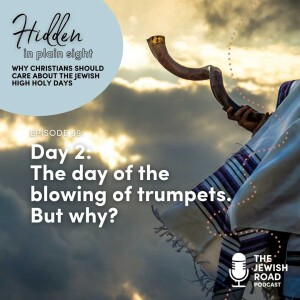
The sound of the shofar (ram’s horn) calls us to something extraordinary - Yom Teruah, commonly known as the Day of Trumpets.
This isn't just any call; it's an announcement, a heralding of something majestic. The trumpet's sound penetrates the soul, reminding us to awaken from our spiritual slumber.
For Christians, the trumpets hold a dual meaning: they remind us of God's sovereignty and offer a glimpse into future prophetic events, like the return of Jesus.
Friday Sep 15, 2023
Friday Sep 15, 2023
As the Days of Awe kick off, we find ourselves on the cusp of a deeply spiritual journey. It's a time to pause and reflect, to account for the year that's been and prepare for the one that's coming.
The Jewish tradition teaches that during these Ten days, three books are opened in the heavenly courts: the Book of Life, the Book of Death, and the Book of the In-Between. Each person's fate for the coming year will be inscribed in one of these books based on their deeds.
While this may sound intimidating, it's also a beautiful reminder that our actions have consequences - both in this world and the next.
Tuesday Sep 12, 2023
Tuesday Sep 12, 2023
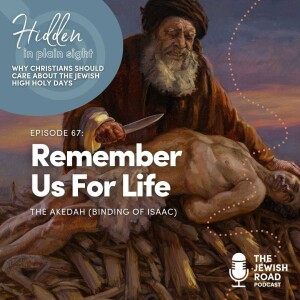
The human soul seems hardwired to long for atonement—a strong, sometimes desperate, desire for forgiveness and release. This is a sentiment that echoes across cultures and religious practices, revealing a shared yearning to be set right with God.
We find in the story of the Akedah a vivid representation of how far God was willing to go to grant us that atonement. "God will provide for himself the lamb for a burnt offering, my son," Abraham tells Isaac, echoing a promise fulfilled through Jesus (Genesis 22:8). Akedah literally means, “The Binding,” and recounts the story of Abraham taking his “one and only son” Isaac to the top of Moriah to sacrifice him.
In Jewish tradition, the Akedah resurfaces each year during Rosh Hashanah services, serving as a collective meditation on obedience, sacrifice, and divine intervention. The sound of the shofar, the ram's horn, harkens back to that moment when God provided a ram to replace Isaac. This narrative reverberates today as Jews consider God's provision and await the coming of the Messiah. Yet for many, the realization that the Messiah has already come remains an unopened gift.
As we read in Hebrews 11:19, Abraham "considered that God was able even to raise [Isaac] from the dead." This faith foreshadows the faith we're called to have in Jesus, Yeshua in Hebrew, as the ultimate sacrifice and the final unbinding of sin. Let's pray today for our Jewish brothers and sisters to recognize Yeshua as their atonement and their freedom from spiritual bondage.
Sunday Sep 10, 2023
Sunday Sep 10, 2023
Ever been on a hunt for your glasses just to find them perched on your head? Or searched for your phone while you're actually holding it? Sometimes the things we're looking for are right in front of us, hidden in plain sight. We wrote this guide with our Christian friends in mind for that very reason. You might think that the upcoming Jewish High Holy Days aren't for you, that they're exclusively a 'Jewish thing.' We get it, but hear us out. We're not saying you're wrong for thinking that way, but we do believe you're missing out on something truly transformative. We invite you to take a closer look, to consider the deeper connections, and to broaden your understanding of faith by acknowledging its roots. So stay with us; you might just discover something you never knew you were missing.
The Ten Days of Awe, also known as the High Holy Days, are a significant period in the Jewish calendar. These represent the last three festival days given to Israel in Leviticus 23 in the Hebrew Bible, or what we at The Jewish Road like to call Act One of a two-act play. These festival days are actually called Moedim in Hebrew, or “Appointed Times.” These are God’s appointed times for Israel in which He laid out the course of history for Israel and, in fact, the world as He brings everything to fulfillment in His kingdom.
We should note that there are seven appointed times or festival days given to Israel in Leviticus 23, and they were all prophetic. Four of them have been historically fulfilled, leaving the final three festival days that occur in the fall as prophetic and yet to be fulfilled.
Having said that, the first appointed time on the Fall calendar is in Leviticus 23:23-25, the Feast of Trumpets or Yom Teruah in Hebrew, the Day of Blowing Trumpets. This is the first of the High Holy Days on Israel’s calendar and it is celebrated today as Rosh Hashanah or the Jewish new year. However, if we look at verse 23 we read that this day is a solemn rest and memorial that occurs on the first day of the seventh month, Tishrei. The first month on the Hebrew calendar is Nisan, the time of Passover in the spring. How is this disparity reconciled? Jewish people traditionally began to celebrate this holiday as Rosh Hashanah as the civil new year on Israel’s calendar, beginning during the second Temple period. It is strictly traditional as the new year is in the spring. Interestingly, the Babylonians celebrated their new year at this time and we believe that Israel brought that tradition with them some time after the Babylonian captivity.
The blowing of the shofar or the trumpet was meant to bring Israel’s attention to a time of reflection, repentance, and renewal as we turn our attention to God. It is a time when people take a hard look at their lives and actions over the past year.
Traditionally, this begins what is called the Ten Days of Awe. It's believed that God opens the Book of Life on Rosh Hashanah and seals it on Yom Kippur, deciding the fate of each individual for the upcoming year.
Why is this season important? Well, it's a rare pause, a collective breath for introspection. It’s not just about asking for forgiveness, but also about forgiving others and oneself.
In Jewish tradition, it's a time to set the tone for the year ahead, wipe the slate clean, and start anew. It’s why on the civil calendar, the Jewish community calls this the Jewish New Year. You’ll probably see on your local TV news a Happy New Year wish to “our Jewish friends” and you’ll see a graphic of apples and honey, that your new year may be sweet.
But really, this isn't just a religious exercise; it's a deeply human one, a call from the Creator to not only look back, but also look forward.
Tuesday Aug 22, 2023
Tuesday Aug 22, 2023
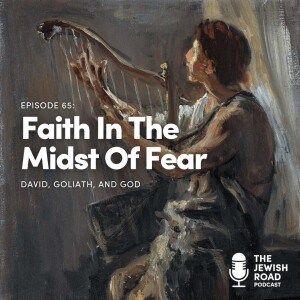
Are you faced with a challenge that feels too big to handle? Do fear, anxiety, or worry keep you awake at night? In this episode of The Jewish Road Podcast, titled "Faith In The Midst Of Fear," we turn to one of the most well-known stories in the Bible: David vs. Goliath. But this episode isn’t just about a young boy and a giant man; it's about something deeper.
What gave young David the courage to face Goliath? What did he know about the character of God that allowed him to have faith in the face of fear? It's a question we all should be asking ourselves when we find ourselves in seasons of doubt and uncertainty.
This episode isn't about heroes and villains; it's about understanding Who our God is and what He promises to do for us. It's about recognizing that, at its core, every story in the Bible is a story about God - and so is your story.
If you're in a place where obstacles seem insurmountable and fear feels overpowering, this episode is here to remind you: both faith and fear demand fulfillment. The choice of which to believe in lies with you.
Join us for an inspiring conversation, filled with hope and encouragement. This is a message for anyone in a season of fear, offering a perspective shift that can make all the difference. It's time to remember what David knew and face our giants with unwavering faith.
So tune in, especially if you need a timely reminder of God's character and promises. Let's explore together how faith can overcome fear, no matter the size of the challenges we face. Your story is a story about God, and it's time to believe in that.
Wednesday Aug 02, 2023
Wednesday Aug 02, 2023
Ever felt like you're missing a piece of the puzzle in your faith journey?
Or that there's more to the story of Jesus that remains unexplored?
Or, as a Jew, have you grappled with the idea of embracing Jesus, feeling it might mean forsaking your cherished heritage?
If this hits home for you, then this episode of The Jewish Road Podcast has your name on it.
In "The Road Half Traveled," we invite you on an extraordinary journey that goes beyond the typical narratives heard in Sunday school or synagogue. As Messianic Jews ourselves, we're standing at the fascinating intersection of faith where Jewish tradition and Christian understanding meet.
Picture it as a two-act play, with Jewish and Christian communities each attending a different act and missing the full performance. We're here to guide you through the entire show, revealing the profound links between Act One and Two, the Old and New Testaments.
We tackle real struggles, like challenging dialogues with Jews intrigued about Jesus but anxious about losing their identity, or Christians seeking to uncover the Jewish roots of their faith but unsure where to start.
So, whether you're a Christian keen to dive deeper into your faith's roots or a Jew wrestling with your view of Jesus, join us in this down-to-earth conversation. It's time to journey down the full length of The Jewish Road and unveil the captivating story that unites us all.
Are you ready? Pop in those earbuds, and let's journey on "The Road Half Traveled" together.
Thursday Jul 27, 2023
Thursday Jul 27, 2023
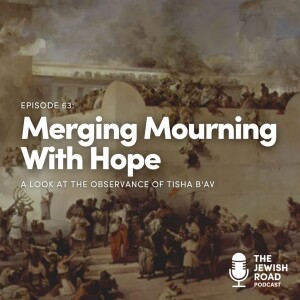
Did you know that both the First and Second Temples in Jerusalem - central to Jewish faith and history - were destroyed on same day, centuries apart? It's as if time stood still to mark a profound period of loss and mourning for the Jewish people.
To put this in perspective, imagine if another event of the magnitude of September 11th happened again on the same date, but centuries later. The sheer coincidence would be staggering, wouldn't it? This is the reality of Tisha B'Av, a day of deep mourning in Judaism.
But Tisha B'Av is not just about the past, it's also about resilience and hope for a better future. It's a significant piece of the historical puzzle that informs our present faith and influences our shared journey. As followers of Jesus, understanding these roots can give us a richer, more nuanced perspective of our own faith.
Tune in to this episode where we delve into the significance of Tisha B'Av and its relevance for us today, even if you’re not Jewish.
Tuesday Jul 25, 2023
Tuesday Jul 25, 2023
In this third and final episode in our “Two Chosen People” series, we journey into understanding the role and identity of God's Commissioned People – the Church.
As we have previously explored, God's chosen ones are two distinct, yet intimately connected groups – the Covenant People (Jews) and the Commissioned People (the Church made up of Jews and Gentiles). After having looked into the unique journey of the Covenant People in our last episode, it's time to unpack the complexities of the Commissioned People – the Church.
From its birth at Shavuot, or Pentecost, the Church was initially entirely Jewish. Yet, it evolved, expanding to welcome the Gentiles, or the Nations, and turning into a vibrant blend of Jews and Gentiles. Paul's metaphor of Gentiles being grafted into Israel's tree beautifully illustrates this unity in diversity.
In this episode, we explore the divine calling of the Church – its mission to go out into the world and make disciples of all nations, beginning with the Jewish people and extending to every corner of the globe. This divine commissioning is not just a task or responsibility, but a significant part of the Church's identity.
We also look into the implications of this divine commission, the struggles, and triumphs, the challenges, and victories experienced by the Church in carrying out this mission.
Join us as we celebrate this “Unprecedented Union” and God's plan for unity and mutual enrichment. Together, we look at how our roots intertwine and the wondrous ways God uses His Commissioned People to accomplish His divine will.